
Mille-Feuille Nabe (Pork and Cabbage Hot Pot)
By Dominic Lamirande
This Japanese dish features alternating layers of Napa cabbage, tender thinly sliced meat, and mushrooms, all simmered in a savory dashi broth. Served with a homemade ponzu sauce, it is the ultimate traditional comfort food. A must-try!
Mille-Feuille Nabe: The Layered Japanese Pork and Cabbage Hot Pot
This traditional Japanese hot pot (nabe referring to communal dishes simmered right at the table) combines simple ingredients with a gorgeous presentation!
The concept: Napa cabbage leaves are layered with paper-thin slices of meat, cut into uniform sections, and arranged snugly in a pot to create a stunning “mille-feuille” effect.
This recipe comes from Tiffany Lai, who loves cooking authentic Asian dishes! According to her, every single ingredient plays a crucial role and cannot be substituted. To achieve a rich, flavor-packed dashi broth, heading to your local Asian grocery store to gather all the traditional essentials is key.
Tips for a perfect recipe:
-
Pack the cabbage sections tightly: make sure to fit the cabbage and meat rolls snugly into the pot. The vegetables will shrink slightly as they cook, so a tight arrangement keeps the sections from collapsing.
-
Do not overcook the dashi broth: when steeping the dried bonito flakes (katsuobushi), keep the liquid at a very gentle simmer for just 3 to 5 minutes before straining. This preserves the delicate flavor of the broth without introducing any bitterness.
-
Choose the right pot depth: opt for a wide, shallow pot or casserole dish so the tops of the cabbage sections rest just flush with the rim.
Why make this recipe?
Discover a traditional japanese dish: a wonderful opportunity to experience a heartwarming meal deeply rooted in Japanese table-sharing culture, packed with authentic Asian flavors. I’ll even show you how to make dashi broth and a homemade ponzu sauce from scratch!
Showcase Napa cabbage: the perfect, delicious solution to use up an entire head of cabbage in one go: no waste, no leftover cabbage sitting in the fridge!
Stunning presentation: looks restaurant-worthy, yet comes together effortlessly! The neat layers of cabbage, pork, and mushrooms simmering in broth make a beautiful centerpiece for the table.
Light & Balanced: packed with fresh vegetables, gently simmered, and naturally low in fat and heavy carbs.
Fun and communal experience: Served bubbling hot right in the middle of the table, allowing everyone to dive in and dip their bites into the bright, tangy homemade ponzu sauce.
In a small bowl, whisk together the soy sauce, fresh lime juice, black sesame vinegar, mirin, and maple syrup until fully combined. Chill in the refrigerator until ready to serve.
In a pot, bring the water to a boil with the dashi powder and dried wakame. Add the katsuobushi, lower the heat, and simmer gently for 3 to 5 minutes. Strain the broth through a fine-mesh sieve to remove the bonito flakes and wakame. Stir the Japanese soy sauce into the strained broth and set aside.
Separate the large Napa cabbage leaves. On a cutting board, lay one large cabbage leaf flat. Arrange an even layer of thinly sliced meat on top. Cover with another cabbage leaf, followed by another layer of meat. Repeat to stack 3 to 4 alternating layers of cabbage and meat. Cut the stack crosswise into 2-inch (5 cm) sections (adjusting the height to match the depth of your pot).
In a large, shallow pot or casserole dish, pack the cut sections tightly, standing them vertically from the outer edge working toward the center. Tuck the oyster and enoki mushrooms into the center or between the rows to fill any remaining gaps.
Gently pour the warm dashi broth into the pot until it reaches about halfway up the ingredients. Cover with a lid and bring to a boil over medium-high heat. Reduce the heat and simmer for 10 to 12 minutes, until the cabbage is tender and the meat is fully cooked.
Garnish generously with finely chopped green onions right before serving. Place the bubbling pot directly in the center of the table, dipping the cabbage, meat, and mushrooms into the homemade ponzu sauce.
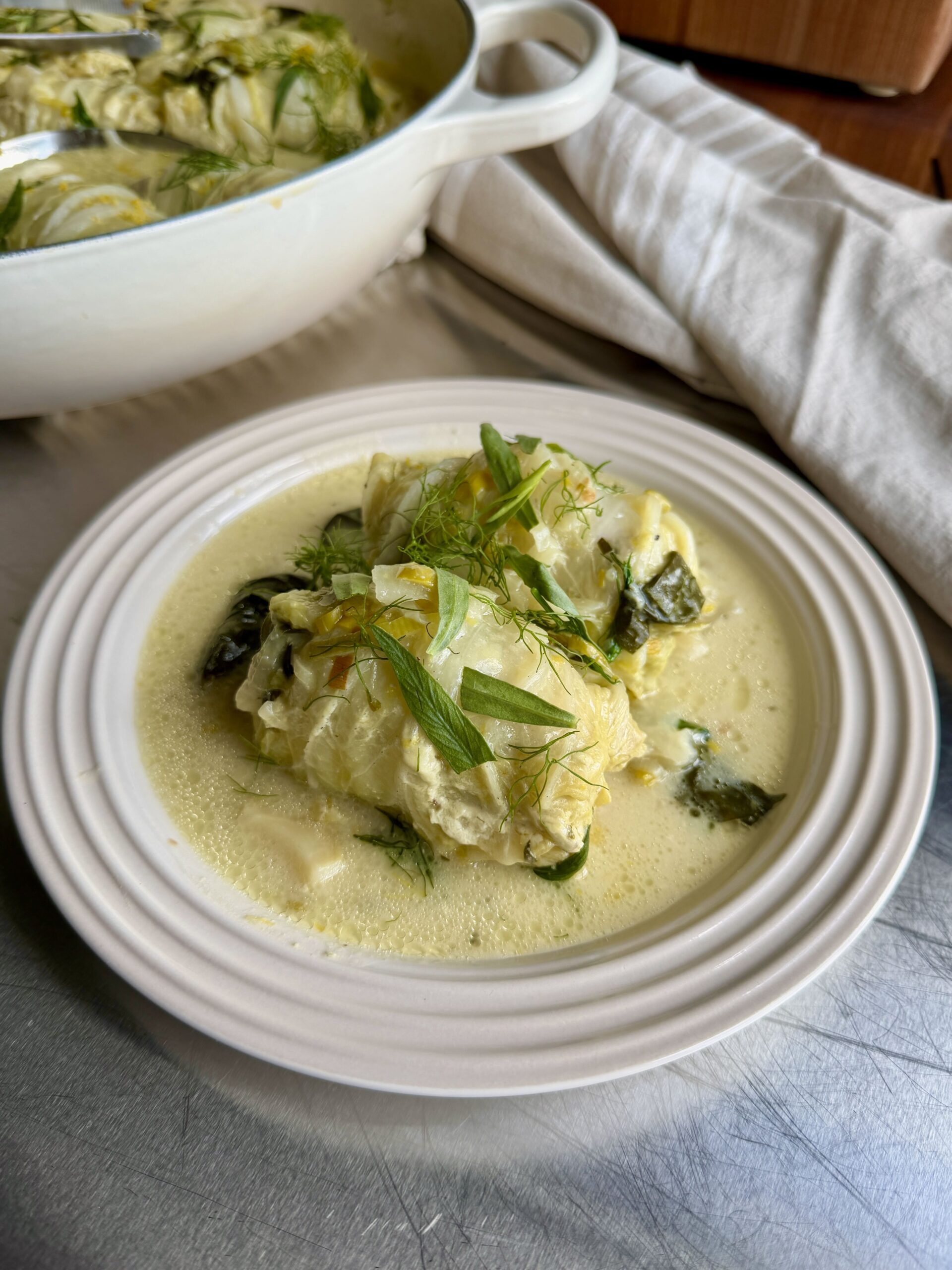

Bon appetit and enjoy!
You can also leave us a comment and share your experience with this recipe.